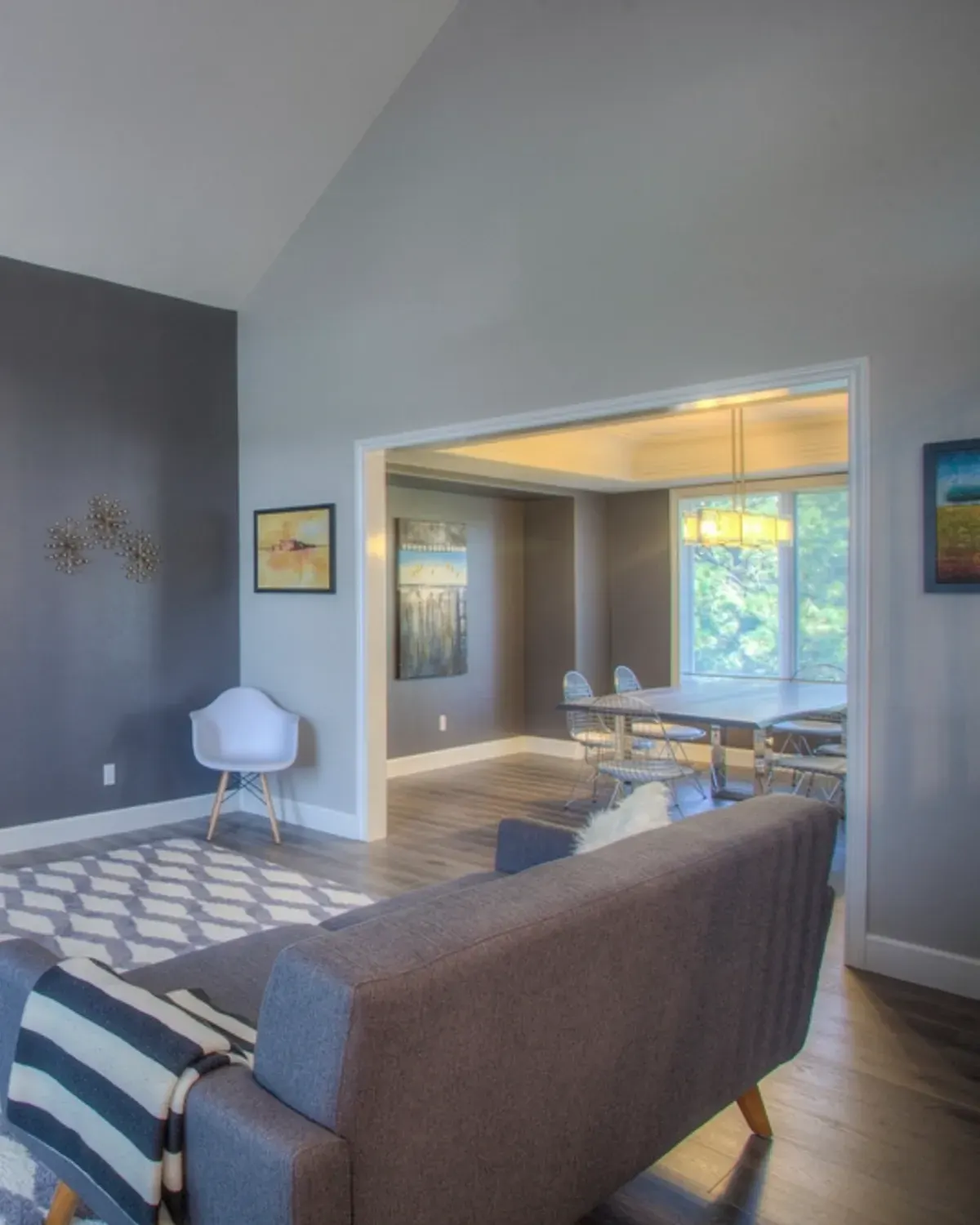
A tiny bedroom for $146
Make a tiny bedroom feel calm and roomy for under $150 — bed placement, lighting, storage and the bedding trick hotels use.
What it costs
| Two plug-in swing-arm wall lamps | $40 |
| White duvet cover set | $45 |
| Floating shelf as a nightstand | $15 |
| Over-the-door organizer | $16 |
| Under-bed storage bags (2) | $18 |
| Linen-look throw blanket | $12 |
| Total | $146 |
Rough US prices at the time of review. Prices change — check before you buy, and skip what you already own.
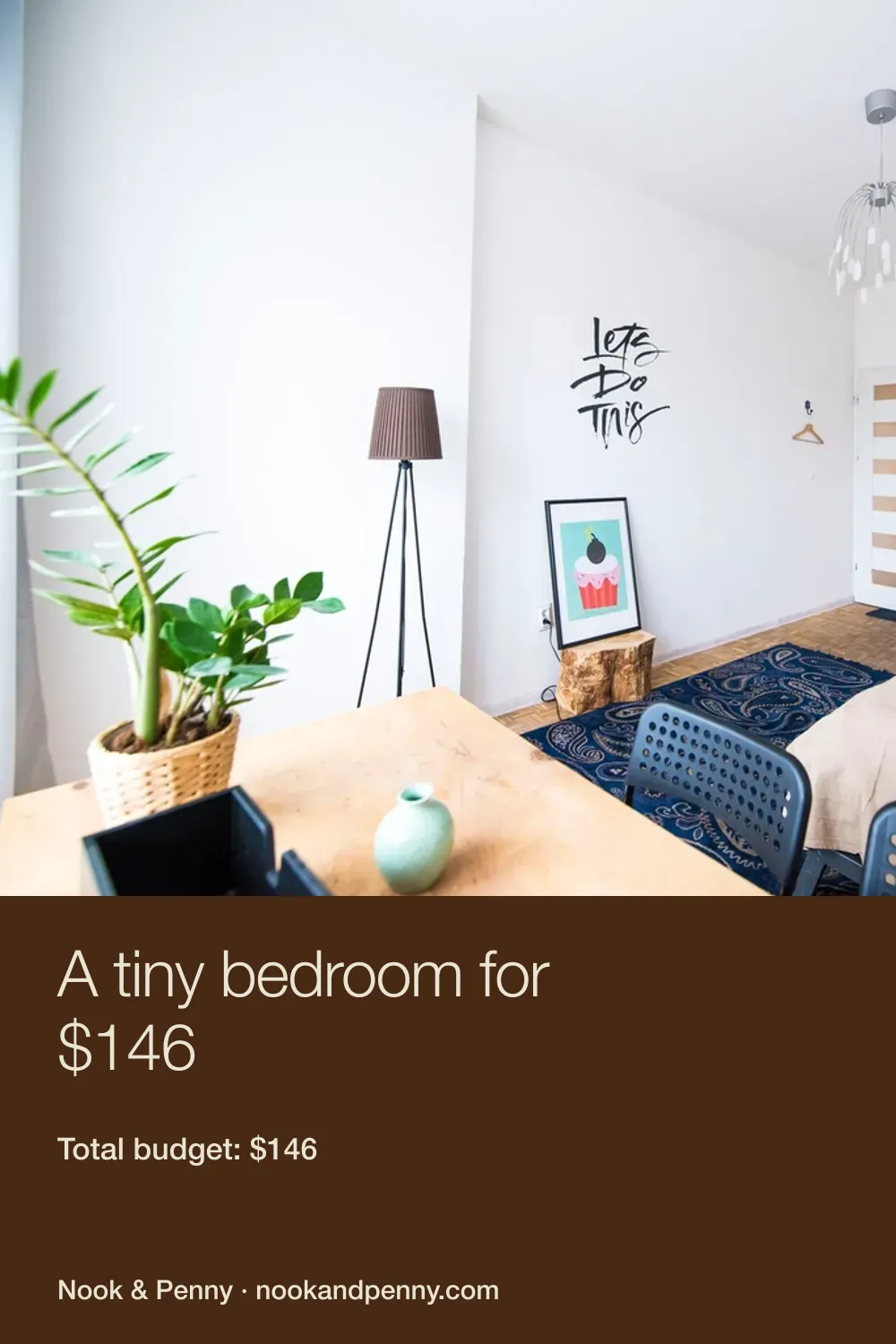
To make a tiny bedroom work, put the bed in the right spot first, clear the floor, and move lamps and the nightstand onto the wall. The whole plan below costs about $146.
A tiny bedroom has one job: help you sleep. The goal is calm, and calm is surprisingly cheap.
1. Decide where the bed goes first (free)
Everything else follows the bed. Two people? Center it on the longest wall and keep at least 24 inches of walking space on each side. One person? Push it into a corner. You’ll gain a full walkway and the room instantly feels bigger.
2. Go all white (or all one color) on the bed (~$45)
Hotels use white bedding for a reason: it’s calm, it photographs well and it never clashes. A simple white duvet cover set is one of the cheapest ways to make a bedroom look “done.” Add texture with a linen-look throw (~$12) at the foot of the bed instead of colorful pillows.
3. Hang the lights, ditch the lamps (~$40)
Plug-in swing-arm wall lamps free up the entire nightstand. Mount them at about shoulder height when you’re sitting up in bed. Run the cords down neatly or use a cord cover. Pick lamps with a UL or ETL listing mark on the cord or base — it means the design was safety-certified.
4. Use a floating shelf as a nightstand (~$15)
A 16-inch floating shelf holds a phone, a book and a glass of water — which is all a nightstand really needs to do. Zero floor space, and the floor showing underneath makes the room feel bigger.
5. Store under the bed (~$18)
Two zippered under-bed bags hold all your off-season clothes. If the bed is too low, add risers (see our IKEA hacks).
6. Use the back of the door (~$16)
An over-the-door organizer is ugly in photos and amazing in real life. Use it for shoes, accessories or chargers. Choose clear or plain fabric pockets so it doesn’t add visual noise.
7. Mount the TV, or better, skip it (free)
A dresser-top TV eats space and sleep. If you need one, mount it — a TV sitting on a dresser is exactly the tip-over setup the CPSC’s Anchor It! campaign warns about. If you can live without it, your bedroom becomes a better place to sleep.
8. Curtains to the floor (~$25, optional)
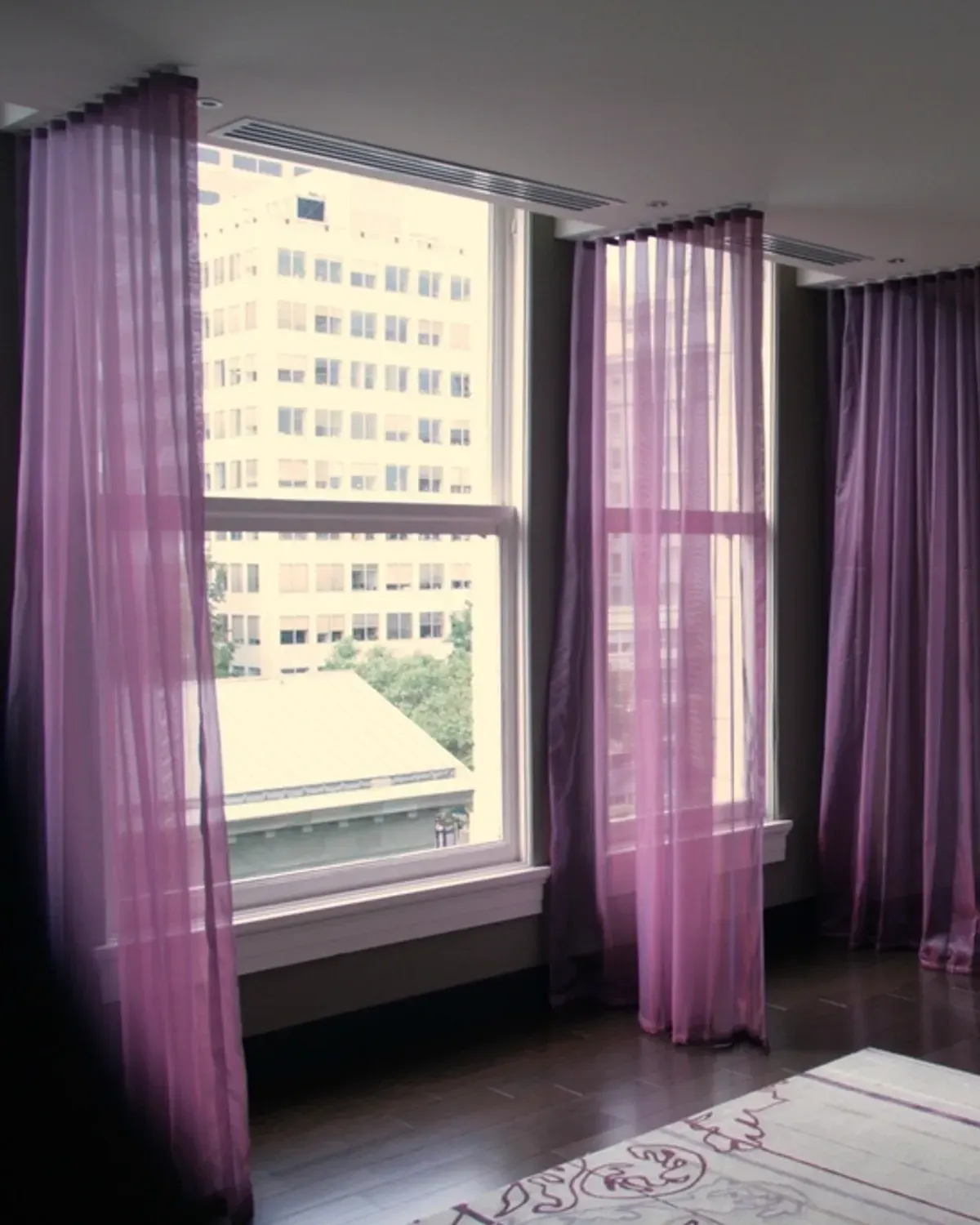
Same rule as the living room: hang them high and wide. In bedrooms, choose blackout lining for better sleep. (See how to make a small room look bigger.)
9. One piece of art, one size up (free–$20)
Instead of a gallery wall, choose one large print above the bed. Print a free public-domain artwork at a copy shop and put it in a cheap poster frame.
10. Keep the floor clear (free)
The more floor you see, the bigger a room feels. No baskets, no piles, no chair-that-holds-clothes. If something lives on the floor, give it a home with a lid.
11. Add one scent (free–$10)
A diffuser or a linen spray turns a tiny room into a sanctuary. It’s a small thing, but it’s the detail people remember.
The $50 version
Only have $50? Get the white duvet cover and a floating shelf, push the bed to the right spot and clear the floor. That alone will make the room feel twice as calm.
Sources
Quick answers
Where should a bed go in a tiny bedroom?
If two people share the bed, center it on the longest wall with at least 24 inches on each side. If one person sleeps there, push it into a corner — you gain a whole walkway.
What color makes a small bedroom look bigger?
Light, warm colors that match the bedding. When the walls, bedding and curtains are in the same family, the edges blur and the room feels bigger.